Air in Pond Tubing After a Water Change: Causes and Fixes
A brief burst of air after restarting a pond pump may clear on its own. If bubbles keep coming, check the water level and pump intake first, then inspect tubing connections and setup.
Air in pond tubing after a water change
Air in pond tubing after a water change is often a trapped pocket released when the pump restarts. If the bubbles continue, the water level may be too low, the pump may be drawing air, or a connection may be letting air into the line. Turn the pump off before adjusting it, and don’t let it run dry.
Check the water level and pump intake
A water change can leave the pond below the pump’s normal operating level. Check that a submersible pump is fully submerged and that its intake is clear. For an external pump, confirm that the water level and intake arrangement match the pump’s instructions.
If the intake is near the surface, a vortex can pull air into the pump. Add water to the proper operating level and reposition the intake if needed. Restart the pump and watch the return: a few bubbles that quickly fade are usually less concerning than a steady stream.
Look for trapped air, kinks, or a blockage
With the pump off, check the tubing from the pump to the outlet. Straighten kinks and make sure the hose is not pinched. If the line was disconnected during the water change, air may be trapped in a high loop or bend. Route the tubing so air can escape toward the outlet, and prime an external pump as its manual directs.
If flow is weak as well as bubbly, check the pump intake and clean the filter or pump prefilter according to its instructions. A clogged filter can restrict flow, though it does not usually explain a continuous stream of air by itself.
Product prices and availability are accurate as of the date/time indicated and are subject to change. Any price and availability information displayed on Amazon.com at the time of purchase will apply to the purchase of this product.
Inspect connections and seals
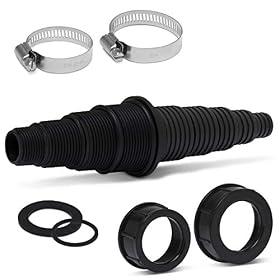
Check hose ends, clamps, adapters, and the pump’s inlet connection for looseness, cracks, or worn seals. On an external pump’s suction side—the tubing that brings water to the pump—even a small leak can draw in air without visibly leaking water. Tighten or reseat compatible connections, and replace damaged tubing or seals.
Do not use sealant or tape unless the pump or fitting manufacturer recommends it. Keep water away from electrical connections, and disconnect power before handling the pump or fittings.
Product prices and availability are accurate as of the date/time indicated and are subject to change. Any price and availability information displayed on Amazon.com at the time of purchase will apply to the purchase of this product.
Check setup, then the pump
Confirm that inlet and outlet hoses are connected to the correct ports, valves are open, and any required priming steps have been followed. Make sure the pump is not operating above its intended water level or outside the installation limits in its manual.
If bubbles persist after these checks, switch the pump off. Follow the manufacturer’s troubleshooting instructions or have a qualified pond or pump professional inspect it. A damaged seal or fitting may need replacement; consider replacing the pump only if it remains unable to prime or circulate water after the correct setup and compatible parts have been confirmed.
FAQ
Is it normal to see bubbles after restarting a pond pump?
A short burst can be trapped air pushed out of the tubing after the pump restarts. It should diminish as the line fills. Persistent bubbles or weak flow call for checks of the water level, intake, tubing, and connections.
Can a low pond level make air appear in the tubing?
Yes. If a pump intake is too close to the surface, it can draw in air, sometimes through a vortex. Restore the proper operating water level and check the pump’s position and installation instructions.
Should I keep running the pump while it is bubbling?
Do not let a pump run dry or continue operating if it is not moving water properly. Turn it off while checking the water level, intake, and connections, and follow the pump manufacturer’s instructions.