
Best energy-efficient pond pump
The most energy-efficient pond pump is not always the one with the lowest wattage. Choose a pump that delivers the required flow at your…
Practical help sizing, installing and troubleshooting pond pumps.
The most energy-efficient pond pump is not always the one with the lowest wattage. Choose a pump that delivers the required flow at your…

For a DIY liner pond under 500 gallons, the best pump is usually a small adjustable-flow submersible pump sized for the pond’s actual head…

The best pond pump for a koi pond is sized for the pond’s actual water volume, plumbing resistance, filter requirements, and desired…
The best pond pump for a small backyard pond is sized for the pond feature you want to run—not simply the pond’s water volume. Compare flow…
The best pond pump for a waterfall is sized for the flow your spillway needs after accounting for vertical lift, tubing friction, fittings,…
The best pond pump for fish provides steady circulation without creating excessive current, overheating the water, or clogging easily.…
The quietest pond pump is usually one correctly sized for the feature, isolated from hard surfaces, and operated with clean water and…
The best pond pump for a bog filter is one that delivers the required flow after vertical lift and plumbing losses—not simply the pump with…
The best pond pump for a pressurized filter is one that delivers the required flow after head loss without exceeding the filter’s maximum…
A spare pre-filter foam is a simple way to reduce summer pond maintenance delays. Match the replacement to your pump or pump cage, choose…
A pond pump and UV clarifier combo can simplify installation, but the pump, UV clarifier, tubing, and filter must be properly matched. Here…
A pond pump with a foam pre-filter block can protect the impeller from leaves and debris while reducing the load on a downstream filter.…

A bigger pond pump is not always the answer to weak circulation. Compare an external filter with gravity return against increasing pump…

Match a pond pump to a biological filter by comparing the filter’s recommended flow with the pump’s actual output at your installation…
A coarse intake screen, pump cage, or prefilter can keep leaves away from a pond pump. Choose a design that fits the pump, allows enough…

A UV clarifier can help control suspended green water, but it must receive the correct flow from the pond pump and work alongside…

Green pond water is usually caused by suspended algae, not weak circulation. A UV clarifier can address that problem directly, while a…
A mesh bag of lava rock can catch some larger debris around a pond pump, but it can also clog and restrict flow. Use it as a basic intake…

Pond plants can absorb nutrients and help reduce algae pressure, but they are not a substitute for a properly sized pump, circulation, or…
A pre-filter cage protects a pump intake from debris; a skimmer collects floating debris and may also house the pump. They do different…

A tall waterfall needs more than a pump’s advertised flow rate. Choose a pump using its flow-at-head rating, then account for vertical…
A reducer fitting can sharply reduce fountain height by restricting flow and adding friction loss. Check the fitting size, tubing, clogs,…

Friction loss in pond tubing reduces the water a pump can deliver. Learn how to estimate it from tubing size, flow rate, length, fittings,…
The right pond flow depends on pond volume, filtration, water features, and the pump’s actual output at your installation height—not just…

A bucket test gives you the pond pump’s actual flow at its installed outlet, including the effects of tubing, lift height, fittings,…

One large pond pump is usually simpler and easier to size, while two smaller pumps can provide redundancy, separate water features, and…

A 10 by 15 pond can require very different pumps depending on its average depth, waterfall height, tubing run, and filtration. Use the…
For a 1,000-gallon pond, start by looking for a pump that delivers about 1,000 gallons per hour at the pump’s actual operating height—not…
A pump’s zero-head GPH is its flow with virtually no lift or plumbing resistance. For a waterfall, use the flow listed at your system’s…
GPH means gallons per hour—the amount of water a pond pump can move under specified conditions. The number on the box is not necessarily…

Head height is the vertical lift a pond pump must overcome to move water to its discharge point. The higher the lift—and the more…

A higher GPH rating does not guarantee better pond circulation. Choose a pump by its flow at your actual head height and by what your…
A low-watt pond pump can run a small liner pond efficiently, but wattage alone does not determine whether it is suitable. Match the pump to…
A 1,000-gallon pond with a 3-foot waterfall usually needs a pump selected by both circulation and waterfall flow. Measure the waterfall…
A submersible pond pump with a pre-filter cage can reduce debris reaching the impeller and make routine maintenance easier. Here is what to…

A pump for a 4-foot waterfall is priced according to the flow rate and total head it must overcome—not waterfall height alone. Learn how to…

A 150-watt pond pump uses 3.75 times as much electricity as a 40-watt pump when both run for the same amount of time. Your actual cost…

A pond pump’s yearly electricity cost depends mainly on its actual watt draw, whether it runs continuously, and your local electricity…
A pond pump can cost anywhere from a modest equipment purchase to a larger installation expense, depending on flow rate, lift height,…

A starter pond pump kit is usually easier for a small, straightforward setup, while buying pieces separately gives you more control over…

A clogged intake or impeller can make a healthy pond pump appear worn out. Use this check order to decide whether cleaning, replacing a…
A barely spraying fountain head is usually caused by a clogged filter or nozzle, restricted tubing, low water, an air leak, or an…

A pond pump clogged with sludge usually has a blocked intake screen, foam prefilter, hose, or impeller chamber. Unplug the pump, clean the…
A pond pump that repeatedly starts and stops is usually responding to restricted flow, low water, trapped air, overheating, or an…
A pond pump usually leaks at the housing because a gasket or O-ring is dirty, damaged, misaligned, or compressed unevenly. Unplug the pump,…
A pond pump losing pressure is usually dealing with a dirty filter, clogged tubing, an air leak, incorrect setup, or a failing impeller.…
A grinding pond pump usually has debris in the impeller, a worn impeller or housing, or a bearing problem. Unplug the pump before checking…
If your pond pump is not priming, start by checking water level, the intake filter, tubing, trapped air, and fittings. The correct fix…

A pond pump that sucks air at low water usually has inadequate water covering the intake, a blocked or poorly positioned intake, an air…
A running pond pump does not automatically remove suspended algae. Green water usually means the pond needs effective mechanical…

A pump that is too strong can empty a small fountain bowl through splashing, create excessive noise, or overwhelm the fountain head. Reduce…
A replacement impeller can restore flow when a pond pump hums, runs weakly, or stops after debris damage. Match the exact pump model and…

A clogged or dirty impeller can reduce pond-pump flow, make the pump noisy, or stop it from moving water. Unplug the pump, remove the…
A brief burst of air after restarting a pond pump may clear on its own. If bubbles keep coming, check the water level and pump intake…

A brief power blink can leave a pond pump stopped, clogged, or tripping its GFCI. Check the pump and water path first, then investigate the…

A noisy waterfall box is often caused by splashing, vibration, trapped air, or a restricted pump intake. Start by locating the sound, then…
A spare pond pump can restore circulation quickly after storm debris, flooding, or pump failure. Here is how to choose a compatible backup…

A pond pump can help keep a small area of water open during winter, but proper placement, cold-weather compatibility, and electrical safety…

In freezing weather, winterize a pond pump according to its manual: shut off power, clean it, drain exposed plumbing, and store it where it…

Ice around a winter pond pump often points to splashing, restricted flow, or a setup that is not suited to freezing conditions. Check the…
A ball valve can reduce a pond pump’s discharge flow, but it should be installed on the pressure side—not the pump’s intake. Here’s how to…
Discharge tubing that is too narrow can sharply reduce pond pump flow and increase resistance. Here is how to confirm the problem, choose a…
A reliable external pond pump vault needs more than a buried box. Plan for drainage, airflow, service access, correctly sized plumbing, and…
The right clamp and barbed fitting should match the hose’s inside diameter, outside diameter, and the equipment connection—not just the…
A check valve can stop a pond return from draining backward during a power outage, but it also adds flow resistance and another part to…
A skimmer box is one of the cleanest ways to conceal a pond pump. Place the pump below the waterline on a stable surface, protect the…

A skimmer pump removes leaves and floating debris at the pond surface, while a bottom pump or bottom-drain setup moves water from deeper in…
The correct tubing diameter for a pond pump depends on the pump outlet, required flow, hose length, lift height, and fittings. Use the…
A submersible pond pump may sit directly on the liner if its instructions allow it and the spot is clean and stable. A smooth, secure…
A check valve may slam when the pump stops and water in the tall waterfall line rushes backward. Check the valve type, direction,…
Use an extension cord with a pond pump only if the pump manufacturer allows it. Choose an outdoor-rated cord suited to the pump’s…
A ground-fault circuit interrupter (GFCI) helps reduce the risk of electric shock around a pond. Use the pump according to its manual and…
Place a pond pump where it can circulate water without sucking up debris, running dry, or becoming difficult to reach for cleaning.

For most pond pumps, keep the intake submerged but raised above the pond bottom. Burying it in muck can clog the intake and send sediment…
Most pond pumps are intended to run around the clock. Continuous circulation supports filtration and water quality, but maintenance,…

A waterfall box can return water to the pond and circulate it, but it needs a separate pump. It may also provide filtration, though it…
The best pond pump for a 2-foot fountain is one that delivers the required flow at the fountain’s actual lift height—not merely the pump’s…

The best pump for a barrel fountain is usually a small submersible pond pump sized for the fountain head and tubing—not simply the pump…
A recirculating stream needs more than a pump’s maximum gallons-per-hour rating. Choose a pump based on vertical lift, tubing friction,…

A small submersible pump with adjustable flow is usually the simplest choice for a patio container water garden. Match its lift rating to…
A nozzle kit is usually the right fix when the pump still moves water but the fountain pattern is damaged or missing. Replace the pump when…

A fountain pump is chosen to create a visible spray at a particular height; a circulation pump is chosen to move water around the pond or…
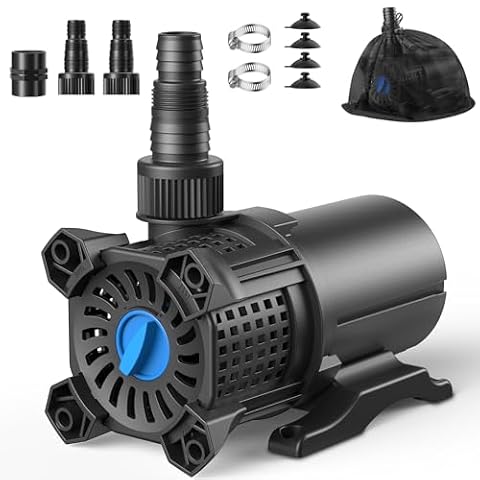
A fountain statue needs a pump that can deliver the right flow at the outlet height—not just one with a high maximum gallons-per-hour…
The right waterfall pump must deliver enough water at the waterfall’s height. Check the pump’s flow chart, account for tubing and fittings,…

A fish-free wildlife pond often does not need a pump. Add one when you need circulation or a water feature, and choose a setup that won’t…
The right pump for a disappearing fountain depends on the feature’s flow requirement and how high the water must be lifted. Check both…

A pond aerator can improve oxygen levels and water movement, but it usually cannot replace a pond pump for filtration, waterfalls, streams,…

Magnetic-drive and asynchronous pond pumps differ in how the motor transfers power to the impeller. Learn which design makes more sense for…

A pond pump is usually the better choice for continuous water-feature circulation because it is designed for long operating periods, water…
Solar pond pumps can simplify installation and avoid grid electricity, while corded pumps provide steadier flow and better support for…

Solar pond pumps can keep running in bright overcast weather, but cloud cover reduces panel output and may lower flow or stop the pump…
Submersible pumps are simple and quiet for many small and medium ponds, while external pumps can be easier to service and more efficient in…
A utility pump can be a useful backup for draining a pond, especially when the water contains sediment or small debris. It is not a…
A pond pump draws water in through an intake and pushes it through a discharge outlet. Understanding that path—and how lift height and…

Many pond pumps last several years, but the actual lifespan depends on build quality, operating conditions, and maintenance. Learn what…

An oil-filled pump can be suitable for a fish pond when its manufacturer specifically approves it for that use and the motor housing…

A useful pond pump review explains the pond, plumbing, and operating conditions behind its verdict. Look beyond star ratings to compare…

A pond pump warranty can help with certain manufacturing defects, but it does not guarantee coverage for every outdoor failure. Check the…