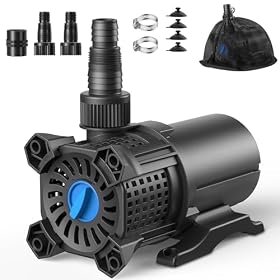
A fountain statue needs a pump that can deliver the right flow at the outlet height—not just one with a high maximum gallons-per-hour rating. Check lift, tubing, connections, and flow control before choosing.
A pond pump for a fountain statue should match the statue’s required flow, the vertical lift from the pond’s waterline to its outlet, and the tubing connection. A pump’s advertised maximum flow is usually measured with little or no lift, so check its performance at the height your fountain needs.
Choose a pump by flow and lift
Start with the statue or fountain manufacturer’s recommended flow rate, if available. If there is no recommendation, look for guidance from the seller or manufacturer before buying; statues vary in how much water they can handle without splashing or overflowing.
Measure the vertical distance from the pond’s normal water level to the point where water exits the statue. This is the lift the pump must overcome. Then check the pump’s performance chart at that height. The maximum gallons-per-hour (GPH) figure alone does not tell you how much water will reach the fountain once lift and tubing resistance are considered.
If the exact flow requirement is unclear, an adjustable-flow pump can make it easier to tune the fountain after installation. Reduce flow if water splashes out of the pond, the statue’s basin overflows, or the display looks too forceful. Avoid choosing a pump so large that you have to restrict it severely to get a manageable stream.
Check tubing and statue connections
Confirm the size and type of the statue’s inlet or internal tubing, then compare it with the pump outlet. The tubing should fit securely, without kinks or sharp bends. Longer runs, narrow tubing, and multiple bends can reduce delivered flow, so use the tubing size recommended by the pump or fountain manufacturer where possible.
If the outlet sizes differ, use a compatible adapter rather than forcing the tubing onto a fitting. Secure connections with the appropriate clamp if the manufacturer calls for one. A loose connection can leak or let the pump spray water where it is not wanted.
Product prices and availability are accurate as of the date/time indicated and are subject to change. Any price and availability information displayed on Amazon.com at the time of purchase will apply to the purchase of this product.
Choose a pump that suits the pond
For a typical in-pond fountain statue, a submersible pond pump is often the simplest arrangement. Check that the pump is intended for the planned use and can operate at the pond’s water level. Its intake must remain submerged as directed, and the pump should not sit where pond debris can quickly block it.
If the pump also supplies a pond filter or another feature, account for that when selecting the pump and plumbing. Splitting the flow can reduce what reaches the statue. Follow the pump and filter manufacturers’ instructions for compatible flow and connections.
Product prices and availability are accurate as of the date/time indicated and are subject to change. Any price and availability information displayed on Amazon.com at the time of purchase will apply to the purchase of this product.
Set up and tune the fountain
Place the pump on a stable surface, preferably raised slightly above the pond floor if the instructions allow it. This can help keep settled debris out of the intake. Route the tubing without pinching it, connect it to the statue, and fill the pond to the pump’s required operating level before switching it on.
Start at a low flow setting if the pump has one, then increase flow gradually. Watch the statue and pond for splashing, overflow, leaks, or a falling water level. Keep the pump’s electrical connections and any outdoor power protection installed as specified by the manufacturer. Unplug the pump before handling it or working on the plumbing.
If the fountain flow is weak
Unplug the pump first. Check the intake screen or filter for leaves and sludge, then inspect the tubing for a kink, blockage, or loose connection. Confirm that the water level is high enough and that the pump is installed in the correct orientation. If these checks do not restore flow, consult the manual for impeller cleaning and maintenance steps.
Replace a damaged or badly worn fitting, hose, or pump seal with a compatible part. If the pump is clean, correctly installed, and still cannot deliver the required flow at the statue’s height, it may be undersized or worn out; compare its performance chart with the actual lift before replacing it.
FAQ
How many GPH does a pump for a fountain statue need?
There is no single GPH requirement for every statue. Use the fountain manufacturer’s recommended flow if available, and check the pump’s performance at the statue’s lift rather than relying only on its maximum GPH rating.
Can I use a regular pond pump for a fountain statue?
Often, if the pump is suitable for continuous pond use, can deliver the needed flow at the outlet height, and connects properly to the statue’s tubing. Confirm those details in the pump and fountain instructions.
Should I use an adjustable-flow pump?
It can be useful when the statue’s ideal flow is uncertain or you want to tune the display. Make sure the pump still provides enough flow at the chosen setting and lift.