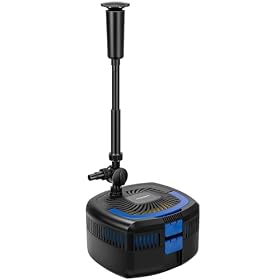
If your pond pump is not priming, start by checking water level, the intake filter, tubing, trapped air, and fittings. The correct fix depends on whether you have a submersible or external pump.
A pond pump that is not priming usually has trapped air, a blocked intake, a leak on the suction side, or an incorrect installation. First identify whether it is a submersible pump or an external pump: a submersible pump must be completely underwater, while an external pump generally needs its intake housing and suction line filled with water before it can move water.
Turn off and unplug the pump before touching the intake, tubing, fittings, or impeller. Keep electrical connections dry, and follow the pump manufacturer’s instructions.
1. Check the water level and pump position
For a submersible pond pump, make sure the pump is fully covered by water. Low water can allow the pump to draw air instead of water, especially if waves, evaporation, or a partially blocked intake reduce the water level around the pump.
Check that:
The pump is sitting upright and is not tilted above the waterline.
The intake is not resting in mud, gravel, or plant debris.
A floating pump or skimmer intake has not become stuck against the pond wall.
The pump is installed at the correct depth according to its instructions.
Do not run a submersible pump dry. A brief dry run can overheat or damage the pump.
2. Clean the filter, intake, and pump cage
A clogged filter or protective cage is one of the most common causes of weak flow that looks like a priming failure. Algae, leaves, sediment, and small debris can restrict the intake enough to prevent normal water movement.
Unplug the pump, remove the outer cage or filter, and rinse it with pond water. Avoid using soap or household cleaners. If the pump has a separate foam filter, clean or replace it when it remains compressed, clogged, or deteriorated.
Also inspect the impeller chamber if the manufacturer permits access. Remove visible debris carefully and check that the impeller can turn freely. Do not force a stuck impeller or disassemble sealed electrical parts.
A pump that works normally with the filter or cage removed—but only during a brief, supervised check—usually needs a cleaned or replaced intake filter rather than a larger pump.
Product prices and availability are accurate as of the date/time indicated and are subject to change. Any price and availability information displayed on Amazon.com at the time of purchase will apply to the purchase of this product.
3. Inspect the hose for clogs and excessive bends
A blocked or poorly routed hose can prevent the pump from moving enough water to establish flow. Disconnect the tubing only after unplugging the pump, then check for:
Kinks and sharp bends
Crushed sections under rocks or edging
Algae, leaves, or sediment inside the hose
A hose diameter that does not match the pump fitting
A long run or excessive lift beyond the pump’s specifications
Flush the hose with clean water or replace it if the inside is heavily clogged or the tubing has collapsed. Use tubing with the correct inside diameter; reducing the diameter can increase restriction and lower flow.
For an external pump, pay particular attention to the intake hose. A discharge-side restriction usually reduces output, but an intake-side blockage or air leak can stop the pump from priming altogether.
Product prices and availability are accurate as of the date/time indicated and are subject to change. Any price and availability information displayed on Amazon.com at the time of purchase will apply to the purchase of this product.
4. Look for air leaks and poor seals
External pumps cannot prime if air is entering the suction line. Inspect every connection between the pond and the pump, including threaded adapters, unions, hose clamps, O-rings, drain plugs, and the pump lid or strainer housing.
An intake-side air leak may not produce a visible water leak. If the pump repeatedly loses prime after shutdown, a suction-side seal is especially suspect. Clean and reseat serviceable O-rings, replace damaged seals, and tighten fittings according to the manufacturer’s instructions. Do not overtighten plastic fittings, since they can crack.
5. Prime an external pump correctly
Many external pond pumps must be manually primed. With the pump unplugged, fill the pump housing and suction line with water using the manufacturer’s recommended fill point. Replace the lid or plug securely, open the appropriate valves, and then switch on the pump.
If the pump immediately loses its prime, turn it off and look for an air leak or a closed valve. Repeatedly running an external pump without water can damage its seal or other internal components.
Do not assume a submersible pump needs manual priming. Its normal installation is underwater, but it may still need to be repositioned or cleared of trapped air after maintenance. Consult the pump instructions for any required venting or startup procedure.
6. Check the valves and fittings
A closed valve, blocked check valve, or incorrectly installed fitting can interrupt the water path. Confirm that:
Intake and discharge valves are open as required.
A check valve is installed in the correct direction.
The check valve is not stuck with debris.
Fittings are not installed backward or cross-threaded.
The tubing is attached to the intended inlet and outlet.
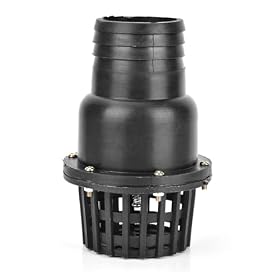
A check valve can help an external pump retain water in the suction line after shutdown, but it cannot compensate for a major leak, a clogged intake, or an incorrectly sized pipe.
7. Check for a full filter, bag, or blocked waterfall outlet
If the pump feeds a pond filter, skimmer, waterfall, or fountain, inspect the entire flow path. A full filter chamber or clogged media can create back pressure and make the pump appear to be failing.
Check the filter media, skimmer basket, waterfall weir, fountain nozzle, and return opening. Clean them as directed by the equipment manufacturer. Make sure the discharge hose is not submerged or routed in a way that creates an unintended air lock.
A filter that is too restrictive for the pump or a return line that is too small can also reduce flow. Compare the plumbing arrangement with the pump’s rated flow, maximum head height, and recommended tubing size. Rated flow is normally measured with little or no lift; actual flow decreases as the water must travel higher or through more fittings.
8. Check the pump’s electrical and mechanical condition last
If the intake, tubing, seals, setup, and flow path are clear, the pump may have an internal fault. With power disconnected, check for obvious signs such as:
A humming sound without water movement
An impeller that will not turn after debris is removed
Intermittent operation
Unusual noise or vibration
A tripped GFCI or circuit breaker
A damaged cord, plug, or housing
Do not open a sealed motor housing or repair damaged electrical components unless the manufacturer specifically permits it and you are qualified to do so. Pond equipment combines water and electricity; use a properly installed ground-fault circuit interrupter (GFCI) and have questionable wiring inspected by a qualified electrician.
If the pump trips a GFCI repeatedly, smells hot or burned, has a damaged cord, or shows signs of water entering the motor, stop using it and replace or professionally service it.
When to replace the pump
A replacement pump is reasonable when the motor will not start after the intake and impeller are clear, the pump repeatedly loses prime despite new seals and leak-free tubing, or repair parts are unavailable. Choose based on required flow at the actual lift height—not just the pump’s maximum gallons-per-hour figure.
If the pump works but flow remains inadequate, first correct restrictions and measure the vertical rise and tubing route. A larger pump is not automatically the answer; it may overwhelm a filter, increase plumbing losses, or create excessive current draw. Match the replacement pump to the pond filter, tubing, waterfall, and electrical supply.
FAQ
Why is my pond pump running but not pumping water?
The intake may be clogged, the pump may be drawing air, the tubing may be blocked or kinked, or an external pump may not be filled with water. Check the water level, intake filter, hose, seals, valves, and priming procedure in that order.
Do submersible pond pumps need to be primed?
Normally, a submersible pump does not need manual priming because it operates underwater. It must be fully submerged, with a clear intake and correctly connected tubing. Follow the manufacturer’s startup instructions if the pump traps air after maintenance.
Why does my external pond pump keep losing its prime?
A suction-side air leak is the most likely cause. Inspect the intake hose, clamps, threaded fittings, pump lid, O-ring, drain plug, and check valve. Also confirm that the pump housing and suction line are filled with water before startup.
Can a clogged filter stop a pond pump from priming?
Yes. A clogged intake screen, foam filter, skimmer basket, or downstream filter can restrict water flow enough to make the pump appear unprimed. Unplug the pump and clean the filter with pond water before checking more complex causes.