A pond pump often lasts several years. As a rough planning estimate, many pumps run for about 3–5 years, but a lower-cost pump in demanding conditions may fail sooner, while a well-maintained model may last longer. The manufacturer’s warranty is not a promise of the pump’s full lifespan.
How They Work · Tue Sep 15
How long pond pumps typically last
Many pond pumps last several years, but the actual lifespan depends on build quality, operating conditions, and maintenance. Learn what affects longevity and when to replace one.
What affects a pond pump’s lifespan?
- Debris and clogging: Leaves, algae, and sediment can block the intake or impeller, making the pump work harder or lose flow.
- Water conditions: Abrasive sediment, heavy debris, and water chemistry outside the manufacturer’s recommendations can wear parts or damage seals.
- Operating conditions: Running dry, overheating, freezing, or operating outside the pump’s specified limits can cause early failure.
- Maintenance: Periodic cleaning helps prevent buildup around the intake and impeller. Follow the manual for how often to inspect and clean the pump.
- Pump quality and design: Materials, construction, and whether replacement parts are available can affect how long the pump remains practical to use.
Replace a worn impeller
 Pondmaster Replacement Impeller for Pump Model 12B - Danner Manufacturing, Inc. - #12756Danner
$17.23 as of
View on Amazon Homeswitch 16mm (0.63") Replacement Filter Impeller Submersible Water Pump Rotor Yellow 73x35x16mm(2.87"x1.38"x0.63")(LxWxD)logyues
$8.99 as of
View on Amazon Danner Manufacturing, Inc., Replacement Impeller Part 12585 for Pump Models 02517, 02527 or 40127.Danner
$18.13 as of
View on Amazon
Product prices and availability are accurate as of the date/time indicated and are subject to change. Any price and availability information displayed on Amazon.com at the time of purchase will apply to the purchase of this product.
How to tell whether your pump is nearing the end of its life
A decrease in water flow is not automatically a sign that the whole pump has failed. First, switch off power and unplug the pump before inspecting it. Check the intake screen or prefilter for debris, clear obstructions in the tubing, and inspect the impeller according to the manufacturer’s instructions. Also check for loose connections, damaged seals, or a kinked hose.
If the pump makes new grinding or rattling noises, repeatedly stops, overheats, or still delivers weak flow after cleaning and correct setup, an internal part may be worn or damaged. A replaceable impeller or seal can be a sensible repair if the part is available and the pump body and electrical cord are in good condition. If the cord or housing is damaged, or repairs approach the cost of a suitable new pump, replacement is usually the safer practical choice. Do not open or repair electrical components unless the manufacturer specifically provides instructions for it.
Add intake protection
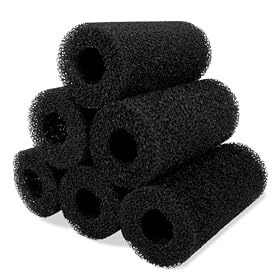 Pre-Filter Sponge Roll for Beckett Pond G FR DP Pump, Part 7209410 7137710Verplexter
$17.70 as of
View on Amazon Pawfly 6 Pack Pre-Filter Sponge Fit for Beckett Pond G FR DP Pump, Part No…Pawfly
$9.99 as of
View on Amazon THREELIN Pre-Filter Sponge Roll Fit for Beckett Pond G FR DP Pump, Part No 7209410…THREELIN
$17.99 as of
View on Amazon
Product prices and availability are accurate as of the date/time indicated and are subject to change. Any price and availability information displayed on Amazon.com at the time of purchase will apply to the purchase of this product.
How to help a pond pump last longer
- Use the pump within its intended setup. Follow the manual for submersion, installation position, and operating limits. Never run a submersible pump dry.
- Keep the intake clear. Inspect and clean the screen or prefilter as needed, especially when leaves or algae are abundant.
- Check the impeller and tubing. Disconnect power first. Remove buildup only as directed, and make sure tubing is not kinked or blocked.
- Protect it from freezing. Follow the manufacturer’s seasonal guidance. If the pump is removed for winter, store it as directed rather than letting it freeze in the pond.
- Use a suitable electrical supply. Keep connections protected as specified by the manufacturer. Use appropriate GFCI protection, and have a qualified professional address damaged wiring or uncertain electrical setups.
Replace a pump that cannot be repaired
 OYO WATER Pond Pump, 2600 GPH Adjustable Flow Submersible Water Pump with Filter Bag, Copper…OYO WATER
$98.98 as of
View on Amazon OYO Water 8000 GPH Pond Pump, 520W Commercial Grade Submersible Water PumpOYO WATER
$179.99 as of
View on Amazon OYO Water Pond Pump, 4500 GPH High Flow Submersible Water Pump for PondsOYO WATER
$129.99 as of
View on Amazon
Product prices and availability are accurate as of the date/time indicated and are subject to change. Any price and availability information displayed on Amazon.com at the time of purchase will apply to the purchase of this product.
When to replace rather than repair
Consider a replacement when the pump has a damaged cord or housing, repeatedly fails after basic cleaning, or no longer provides the flow your pond needs. Before buying, check the required flow for your pond and any filter or waterfall, along with the pump’s lift or head-height rating. A pump’s advertised flow may be measured with little or no lift, so compare the performance information for your actual setup—not just the maximum flow figure.
FAQ
Can a pond pump run continuously?
Many pond pumps are designed for continuous operation, but check the manufacturer’s instructions. Keep the intake clear, ensure the pump is properly installed, and never let a submersible pump run dry.
Does a pond pump’s warranty tell me how long it will last?
No. A warranty describes the manufacturer’s coverage terms, not the pump’s expected lifespan. Operating conditions, maintenance, and the specific warranty exclusions also matter.
Should I replace a pond pump that has low flow?
Not necessarily. Check for a dirty intake, clogged tubing, impeller buildup, or an installation issue first. If flow stays low after those checks, the pump may need a replacement part or a new unit.
Can I leave my pond pump in the pond over winter?
Winter guidance depends on the pump and local conditions. Follow its manual; freezing can damage a pump, so remove and store it if the manufacturer recommends doing so.