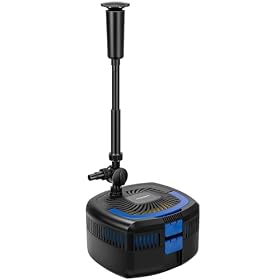
A running pond pump does not automatically remove suspended algae. Green water usually means the pond needs effective mechanical filtration, better flow, reduced nutrient input, or a properly sized UV clarifier.
Green pond water is usually caused by suspended algae, and a running pump alone may not remove it. The pump only moves water; it needs a suitable filter to trap particles or a UV clarifier to damage free-floating algae. Excess sunlight, fish waste, decaying leaves, fertilizer runoff, and weak circulation can keep the water green even when the motor is operating.
Work through the checks below before replacing the pump.
1. Check the filter first
A clogged, incorrectly fitted, or undersized filter is one of the most common causes. Water may be circulating around the pond without being cleaned effectively.
Turn off and unplug the pump before opening the filter or handling equipment.
Check that the filter media is installed in the order specified by the manufacturer.
Rinse reusable media with pond water, not chlorinated tap water, so beneficial bacteria are less likely to be damaged.
Remove leaves, sludge, and string algae from the filter’s intake and media.
Replace media that has collapsed, hardened, torn, or no longer fits tightly enough to force water through it.
Confirm that water is actually passing through the filter rather than bypassing it around a loose lid, damaged gasket, or open drain.
A filter that is too small for the pond or fish load may stay overwhelmed even after cleaning. Mechanical media removes visible debris, but very fine suspended algae may pass through it. That is when a UV clarifier can be useful.
2. Inspect the hose, intake, and discharge
Reduced flow limits both filtration and circulation. Check the entire water path for:
A blocked pump cage or intake screen
Kinked, flattened, or sharply bent tubing
Sludge or string algae inside the hose
Loose hose connections pulling in air
A partially closed valve
A discharge outlet that is pointed into a dead area rather than circulating the pond
Clean the intake with the pump disconnected from power. Do not run the pump dry while checking flow. If the pump is submerged, make sure it remains covered to the depth specified by the manufacturer.
Product prices and availability are accurate as of the date/time indicated and are subject to change. Any price and availability information displayed on Amazon.com at the time of purchase will apply to the purchase of this product.
3. Look for leaks and bypasses
A leak on the suction or pressure side can reduce the amount of water reaching the filter. Inspect hose barbs, clamps, unions, filter lids, O-rings, and drain plugs. A small drip or air leak can be enough to reduce useful circulation.
Replace flattened or cracked seals with the correct replacement part. Do not rely on excessive sealant or force a mismatched gasket into place. If a pressurized filter is leaking, follow its instructions and have a qualified professional assess damaged electrical or pressurized components.
4. Confirm the pump is set up for the actual lift
Pump flow ratings are commonly measured with little or no vertical lift and no restrictive plumbing. The actual flow can be much lower once the pump pushes water uphill through tubing, elbows, filters, valves, and a UV unit.
Check:
The vertical distance from the pond surface to the outlet
Whether the pump is installed on the correct side of the filter
An oversized pump can force water through a filter too quickly for effective contact or cause bypassing. An undersized pump may not provide enough turnover. Match the pump, filter, tubing, and UV clarifier as a system rather than judging the pump by its advertised maximum flow alone.
5. Check whether the filter or skimmer is full
A pond can become green when the filter box, skimmer basket, pre-filter, or pump cage is packed with leaves and sludge. This restricts flow and reduces the amount of water being treated.
Clean the debris-catching components regularly during periods of heavy leaf fall or algae growth. Avoid washing biological media aggressively unless the manufacturer specifically directs it. Beneficial bacteria help process waste, but they do not directly eliminate suspended green-water algae.
6. Reduce the conditions that feed algae
Even a correctly running system may struggle if the pond receives too much light or contains excess nutrients.
Practical changes include:
Provide partial shade with aquatic plants or a suitable shade structure.
Remove dead leaves and decaying plant material.
Keep fertilizer, grass clippings, and soil out of the pond.
Avoid overfeeding fish and remove uneaten food.
Do not add more fish than the pond and filtration system can support.
Remove string algae manually so it does not decompose in the water.
Do not make a large, sudden water change in a stocked pond unless there is an urgent water-quality reason. Test the water and follow a pond-care plan appropriate for the fish and plants.
7. Consider a UV clarifier for suspended green water
A UV clarifier is often the most direct equipment solution for water that looks uniformly green but has relatively little string algae. It passes pond water near an ultraviolet lamp, damaging free-floating algae so the filter can remove the resulting particles.
Before buying one, verify:
The clarifier is rated for the pond’s approximate volume and algae load.
Its required flow rate matches the pump’s real flow after plumbing losses.
The lamp and quartz sleeve are serviceable replacement parts.
Water is forced through the unit rather than flowing around it.
The unit is installed in the position and orientation specified by the manufacturer.
UV equipment does not remove the underlying nutrient source, and it does not replace mechanical or biological filtration. The lamp also has a limited service life, and a dirty quartz sleeve can reduce performance. Disconnect power before opening any UV housing, and never look directly at an operating UV lamp. Use only weatherproof equipment and ground-fault protection suitable for the installation; consult a qualified electrician for uncertain outdoor wiring.
8. Check the pump only after checking the system around it
The pump may be worn or failing if it has noticeably weaker flow after the intake, tubing, filter, and setup have been checked. Possible signs include unusual rattling, overheating, repeated tripping of the ground-fault device, a burning smell, or failure to restart.
Do not open or repair an energized pump. Disconnect it first, and follow the manufacturer’s service instructions. A pump that trips electrical protection, has damaged wiring, or shows water intrusion should be removed from service and evaluated by a qualified professional.
Replace the pump when its actual flow is no longer adequate, the motor is damaged, or the repair cost and downtime are unreasonable. Choose a replacement based on required flow at the installation’s lift and plumbing resistance—not just the maximum flow number on the box.
How long should clearing take?
The clearing time depends on algae density, sunlight, nutrient levels, filter capacity, and UV performance. A clean, properly sized system may improve gradually rather than instantly. If the water does not improve after flow is restored, filtration is cleaned, and the pond’s nutrient sources are reduced, recheck for UV bypass, an incorrectly sized clarifier, excessive fish waste, or a filter that cannot handle the pond.
Avoid adding algaecide without checking its compatibility with fish, plants, pumps, filters, and beneficial bacteria. Some treatments can reduce oxygen as algae dies, which may be dangerous for fish. Follow the product label and maintain adequate aeration when treatment is appropriate.
When to replace a part or the whole system
Replace a filter element, gasket, hose, or pump cage when it is damaged or no longer seals or passes water correctly. Add or replace a UV clarifier when the pond has persistent suspended green water despite adequate flow and filtration.
A complete system upgrade may be more reasonable when the pond has a high fish load, the existing filter is undersized, the plumbing severely restricts flow, or replacement parts are unavailable. Size the new pump and filter together, account for vertical lift and tubing length, and make sure the system provides both mechanical filtration and biological capacity.
FAQ
Why is my pond green if the pump is working?
A pump moves water but does not necessarily remove suspended algae. The pond may need a correctly sized filter, a UV clarifier, better circulation, less sunlight, or reduced nutrient input from fish waste and decaying material.
Will a stronger pond pump clear green water?
Not by itself. A stronger pump may improve turnover, but it can also exceed a filter or UV clarifier’s recommended flow and reduce treatment effectiveness. Check the complete system’s flow requirements before changing pumps.
Does a UV clarifier remove green pond water?
A properly sized and correctly installed UV clarifier can help clear suspended green-water algae. It does not remove nutrients or replace mechanical and biological filtration, and its lamp and quartz sleeve must be maintained.
How often should I clean a pond filter?
Clean it whenever debris restricts flow, with frequency depending on pond size, fish load, season, and leaf fall. Rinse reusable biological media with pond water unless the manufacturer gives different instructions.