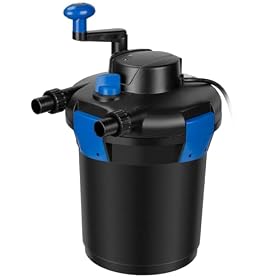
Pond plants can absorb nutrients and help reduce algae pressure, but they are not a substitute for a properly sized pump, circulation, or filtration that catches solids.
Plant filtration instead of cranking pump GPH
If your pond water is difficult to keep clear, increasing pump GPH is not always the answer. Aquatic plants can use dissolved nutrients that would otherwise feed algae, but they do not reliably capture suspended debris or replace the circulation and filtration your pond needs. The better choice depends on whether the problem is excess nutrients, poor circulation, or inadequate solids filtration.
What plants can—and cannot—filter
Aquatic plants absorb nutrients as they grow. Marginal plants, floating plants, and submerged plants can all contribute, though their effect depends on how much is planted, how fast it grows, and whether plant material is removed from the pond. A planted bog or wetland filter uses plants in a dedicated, water-flowing area to provide more consistent contact between water, roots, and filter media.
Plants are less dependable for removing leaves, fish waste, and other visible solids. Those need to be trapped and removed with mechanical filtration, or removed through routine pond cleaning. Plants also do not guarantee adequate circulation or oxygen, especially in a pond with fish.
Product prices and availability are accurate as of the date/time indicated and are subject to change. Any price and availability information displayed on Amazon.com at the time of purchase will apply to the purchase of this product.
When adding plants makes sense
Plant filtration is a useful option when the main concern is ongoing nutrient buildup or algae pressure and the pond can support healthy plant growth. It can complement an existing filter and may reduce how much nutrient-rich material remains in the water over time.
Choose plants suited to your climate, pond depth, and light conditions.
Use containers or designated planting zones to keep vigorous plants manageable.
Thin and remove dead or excess growth; nutrients leave the pond only when plant material is taken out.
Keep floating growth from covering too much of the surface, particularly in a fish pond.
Check local guidance before buying plants, since some aquatic species are invasive or restricted.
If you want a more controlled plant-based treatment area, consider a properly designed bog or wetland filter. It still needs a pump to move water through it, and its flow path and planting area need to suit the pond and filter design.
Product prices and availability are accurate as of the date/time indicated and are subject to change. Any price and availability information displayed on Amazon.com at the time of purchase will apply to the purchase of this product.
When more pump flow or a conventional filter is needed
Look at the underlying problem before changing pump size. If water barely moves in part of the pond, a circulation adjustment or a pump that delivers the required flow after accounting for lift and plumbing losses may help. If the water contains visible particles, a mechanical filter or better maintenance is more directly relevant than adding plants. If the filter is not rated for the pond's load, upgrading filtration may be the practical fix.
Do not choose a pump by its advertised GPH alone. The delivered flow can be lower once the pump pushes water upward and through tubing, fittings, valves, and a filter. Match the pump to the filter's permitted flow and the pond's circulation needs, following the equipment manufacturers' guidance. Excess flow through a filter can impair its operation or create unwanted current, while too little flow can leave areas poorly circulated.
A practical decision path
Algae or recurring nutrient buildup, with adequate circulation: Add suitable plants, maintain them, and reduce excess nutrient sources such as uneaten food and decaying leaves.
Cloudy water with visible particles: Check mechanical filtration and cleaning first. Plants may help with dissolved nutrients but will not quickly strain suspended debris.
Dead zones or weak movement: Check pump placement, blocked intake, tubing, and the flow path. Increase pump capacity only if the system needs more delivered flow and the filter can handle it.
A plant-based filter is the goal: Plan a bog or wetland filter as a complete system, including its planting area, media, and pump flow—not just a larger pump.
Plants are a complement to a functioning pond system, not a shortcut around the right filtration and circulation. If the pond has fish, keep their oxygen and water-quality needs in view and follow the pump and filter manufacturers' instructions.
FAQ
Can pond plants replace a pond filter?
Usually not by themselves. Plants use dissolved nutrients as they grow, but they do not reliably remove suspended solids or ensure adequate circulation. A planted bog filter can be part of a filtration system, but it still needs to be designed for the pond and supplied with suitable water flow.
Will a higher-GPH pump clear green pond water?
Not necessarily. More flow does not directly remove the nutrients that contribute to algae, and a pump must be matched to the filter and plumbing. Plants, nutrient-source control, and appropriate filtration may address the cause more directly.
How do pond plants remove nutrients?
Growing plants take up nutrients from the water. To remove those nutrients from the pond system, trim and remove excess or dead plant material rather than letting it decay in the water.
Do I need a pump for a bog filter?
A bog or wetland filter needs water to pass through its planting area and media. Use a pump and flow arrangement appropriate for the filter design, and follow the manufacturer's guidance for compatible flow.